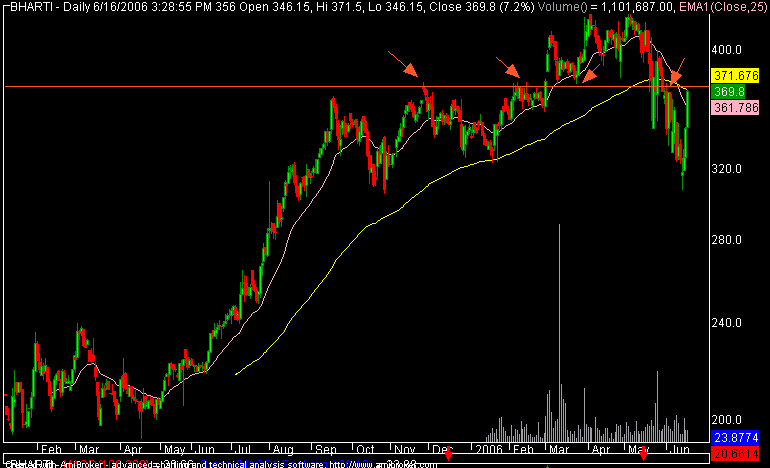
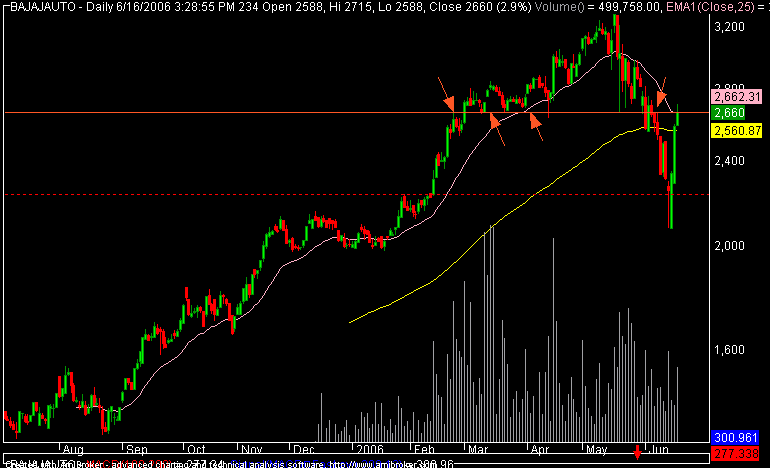
Siemens broke first channel quite comfortably now its trading in second channel and it bounced from near channel support things look bright got this stock cheers rish
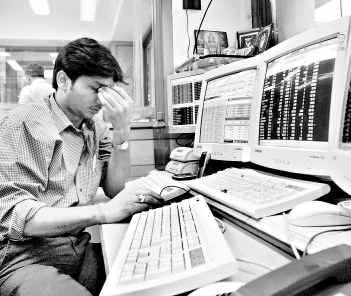
Traders come to the markets with great expectations, but few make profits and most wash out. The industry hides good statistics from the public, while promoting its Big Lie that money lost by losers goes to winners. In fact, winners collect only a fraction of the money lost by losers. The bulk of losses goes to the trading industry as the cost of doing business—commissions, slippage, and expenses—by both winners and losers. A successful trader must hop over several high hurdles— and keep hopping. Being better than average is not good enough—you have to be head and shoulders above the crowd. You can win only if you have both knowledge and discipline. Most amateurs come to the markets with half-baked trading plans, clueless about psychology or money management. Most get hurt and quit after a few painful hits. Others find more cash and return to trading. We do not have to call people who keep dropping money in the markets losers because they do get something in return. What they get is fantastic entertainment value. Markets are the most entertaining places on the face of the Earth. They are like a card game, a chess game, and a horse race all rolled into one. The game goes on at all hours—you can always find action. Most people live in a deep invisible groove—no need to think, make decisions, feel the raw edge of life. The routine does feel comfortable—but deathly boring. Even amusements stop being fun. How many Hollywood movies can you watch on a weekend until they all become a blur? How many trips to Disneyland can you take before all the rides in plastic soap dishes feel like one endless ride to nowhere? To quote Thoreau again, “A stereotyped but unconscious despair is concealed even under what are called games and amusements of mankind. There is no play in them.” And then you open a trading account and punch in an order to buy 500 shares of Intel. Anyone with a few thousand dollars can escape the routine and find excitement in the markets. Suddenly, the world is in living color! Intel ticks up half a point— you check quotes, run out for a newspaper, and tune in for the latest updates. If you have a computer at work, you set up a little quote window to keep an eye on your stock. Before the Internet, people used to buy pocket FM receivers for market quotes and hide them in halfopen desk drawers. Their antennae, sticking out of desks of middleaged men, looked like beams of light shining into prison cells. Intel is up a point! Should you sell and take profits? Buy more and double up? Your heart is pounding—you feel alive! Now it’s up three points. You multiply that by the number of shares you have and realize that your profits after just a few hours are close to your weekly salary. You start calculating percentage returns—if you continue trading like that for the rest of the year, what a fortune you’ll have by Christmas! Suddenly you raise your eyes from the calculator to see that Intel has dropped two points. Your stomach is tied in a knot, your face pushes into the screen, you hunch over, compressing your lungs, reducing the flow of blood to the brain, which is a terrible position for making decisions. You are flooded with anxiety, like a trapped animal. You are hurting—but you are alive! Trading is the most exciting activity that a person can do with their clothes on. Trouble is, you cannot feel excited and make money at the same time. Think of a casino, where amateurs celebrate over free drinks, while professional card-counters coldly play game after game, folding most of the time, and pressing their advantage when the card count gives them a slight edge over the house. To be a successful trader, you have to develop iron discipline (Mind), acquire an edge over the markets (Method), and control risks in your trading account (Money).