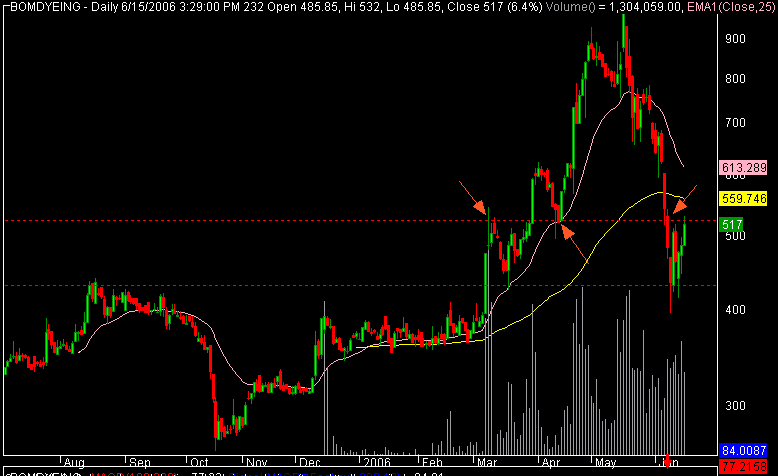
Buy low, sell high. Short high, cover low. Traders are like surfers,
trying to catch good waves, only their beach is rocky, not sandy.
Professionals wait for opportunities but amateurs jump in, driven by
emotions—they keep buying strength and selling weakness, bleeding
their equity into the markets. Buy low, sell high sounds like a simple
rule, but greed and fear can override the best intentions.
A professional waits for familiar patterns to emerge from the market.
He may notice a new trend with rising momentum, indicating higher
prices ahead. Or he may detect the feebleness of momentum during a
rally, indicating weakness. Once he recognizes a pattern, he puts on
a trade. He has a clear notion of how he’ll get in, where he’ll take profits,
and where he’ll accept a loss if the market turns against him.
A trade is a bet on a price change, but there is a paradox. Each price
reflects the latest consensus of value of market participants. Putting on
a trade challenges that consensus. A buyer disagrees with the collective
wisdom by saying the market is underpriced. A seller disagrees with the
wisdom of the entire group, believing the market is overpriced. Both
the buyer and the seller expect the consensus to change, but meanwhile
they defy the market. That market includes some of the most brilliant
minds and some of the deepest pockets on Earth. Arguing with this
group is dangerous business, and it has to be done very cautiously.
An intelligent trader looks for holes in the efficient market theory.
He scans the market for brief periods of inefficiency. When the crowd
is gripped by greed, the newcomers jump in and load up on stocks.
When falling prices squeeze the fingers of thousands of buyers, they
dump their holdings in a panic, disregarding fundamental values. Those
episodes of emotional behavior dilute the cold efficiency of the market,
creating opportunities for disciplined traders. When markets are
calm and efficient, trading becomes a crapshoot, with commissions and
slippage worsening the odds.
Crowd mentality changes slowly, and price patterns recur, albeit
with variations. Emotional swings provide trading opportunities, while
efficient markets chop up and down, offering no edge to traders, only
piling up their costs. Technical analysis tools will work for you only if
you have the discipline to wait for patterns to emerge. Professionals
trade only when markets offer them special advantages.